HemPoddarPolar Geopolitics - Arctic and Antarctic analysis
Polar Geopolitics - Arctic and Antarctic analysis
Eric Paglia91 Avsnittokt 13, 2026
A podcast on the Arctic and Antarctica that applies the lens of geopolitics to analyze a wide range of critical issues pertaining to the polar regions and international affairs. In interviews with leading experts, recurring topics include Greenland, the Arctic Council, climate change, critical raw materials, the Antarctic Treaty System, hybrid warfare, science diplomacy, great power competition between the United States, China and Russia, sustainable development, Svalbard, NATO, Arctic shipping, Alaska, AI, technology and critical infrastructure, the Baltic Sea, military and national security, energy, the role of indigenous peoples in Arctic governance, and more. Polar Geopolitics is hosted by Dr. Eric Paglia, a podcast producer and environmental historian at KTH Royal Institute of Technology in Stockholm, Sweden.
Avsnitt
Greenland as Linchpin for Distributed Arctic Deterrence: Connecting security across the European and North American Arctic in the aftermath of the Greenland Agreementokt 13, 20263283The diplomatic crisis surrounding Greenland centered largely on the question of sovereignty. What effects, however, can the new Greenland Agreement have on addressing underlying security concerns for the wider Arctic region, in which Greenland is strategically situated between Europe, North America and Russia, and where China has shown substantial long-term interest? Prof. Liselotte Odgaard, Senio
Strategic Gateway: Klaus Dodds on the Geopolitics of the South Atlantic and Antarctica in the context of the reignited Falklands-Malvinas disputesep 17, 20263176The Falkland Islands, called Islas Malvinas by Argentina, are a crucial strategic gateway to Antarctica and the sub-Antarctic islands for Great Britain and others. The centuries-old sovereignty dispute between Argentina and the UK over the islands has in recent weeks reignited and could come to have wider implications for the geopolitics of the South Atlantic and Antarctica. Prof. Klaus Dodds, who
Arctic Governance in an era of Geopolitical Rupture: Amb. David Balton on the CAO Fisheries Agreement, relations with Russia, and how to revitalize the Arctic Councilsep 1, 20262897Geopolitical rupture has been a reality in the Arctic since February 2022, but not all forms of Arctic governance have been equally affected. While the Arctic Council has struggled to function since Russia’s invasion of Ukraine, the Central Arctic Ocean Fisheries Agreement has remained resilient, representing perhaps the last bastion of the otherwise defunct idea of Arctic exceptionalism. What can
Far North Frontier of NATO–Russia Tensions: Svalbard's Deterrence Gap with Prof. Katarzyna Zyskjun 25, 20262567Situated near Russia’s Kola Peninsula—home to the Northern Fleet and a core component of Russia’s sea-based nuclear deterrent, including ballistic-missile submarines—the Norwegian archipelago of Svalbard lies within the perimeter of Moscow’s Arctic bastion defence and has become an increasingly important potential flashpoint in the context of heightened NATO–Russia tensions. In this episode, Prof.
Arctic Security in the Hypersonic Age: Golden Dome, Greenland and Transatlantic Arctic relations with Dr. Troy Bouffardmaj 4, 20263581The strategic location of Greenland within the proposed Golden Dome missle defense system has been one of the Trump Administration’s main arguments for acquiring the massive Arctic island. To explain how the futuristic system would work, and why Greenland and the Arctic are crucial for protecting North America against ballistic and hypersonic cruise missles, Dr. Troy Bouffard, director of the Univ
Greenland’s critical raw material potential and China’s current interest in the Arcticfeb 27, 20262312Greenland’s substantial reserves of rare earth elements and other critical raw materials have become a prominent aspect of geopolitical posturing in the Arctic. For many observers, the Trump administration’s interest in acquiring Greenland has been driven in large part by a desire to secure access to strategic minerals and reduce U.S. dependence on Chinese supply chains. The European Union likewis
The European Union as emerging geopolitical player in the Arcticfeb 17, 20261257The emphatic European response to the Greenland Crisis has made clear its growing interest in the Arctic at a time when the European Union is working on an updated Arctic policy. How will a radically altered geopolitical environment influence EU policy, what role does the Arctic play in Europe’s relationship with the United States, and has the crisis created an opportunity for the EU to reassert i
Arctic megatrends: Klaus Dodds and Gosia Smieszek-Rice on the geopolitical forces shaping the future of the circumpolar Northfeb 10, 20264137From the definitive end of Arctic exceptionalism to the long-term implications of the Greenland Crisis, Prof. Klaus Dodds and Dr. Gosia Smieszek-Rice engage in a big picture discussion on Arctic megatrends that are shaping the geopolitical future of the circumpolar North. Has the “Global Arctic” of a decade ago been replaced by a new era of Great Power Competition in which Europe finds itself in a
Greenlandic leaders Aaja Chemnitz and Sara Olsvig on the current crisis and the future of Greenlandfeb 5, 20263333Two prominent Greenlandic voices join this special episode of the Polar Geopolitics podcast,
recorded on location at the Arctic Frontiers conference in Tromsø, Norway. Aaja Chemnitz is one of the two Greenlandic members of the Danish Parliament, and Dr. Sara Olsvig is a former minister of the government of Greenland and the current chair of the Inuit Circumpolar Council. They discuss a range of to
REPRISE EPISODE: Greenland, geopolitics and Danish diplomacy with Jeppe Kofod, former Foreign Minister of Denmarkjan 28, 20262335This is a REPRISE of an episode of Polar Geopolitics originally published on 28 March 2025
Jeppe Kofod, Denmark’s foreign minister during Trump’s first Greenland gambit, joins the podcast to analyze the current situation and share insights from his central role in resolving the previous U.S.-Denmark-Greenland crisis in 2019.
Polar Geopolitics has now started a Substack where we will provide edited
REPRISE EPISODE: Securitization dynamics: Greenland’s pivotal place in the Arctic security configurationjan 19, 20265187This is a REPRISE of an episode of Polar Geopolitics originally published on 15 April 2024
“Greenland is the most dynamic piece in the new Arctic security jigsaw puzzle”, according to a new book that applies the international relations theory of securitization to analyze the security and geopolitics of Greenland and the Arctic. Marc Jacobsen, Ole Wæver and Ulrik Pram Gad, co-editors and authors of
Explaining the America First motivation for acquiring Greenland with former Trump administration official Alexander B. Grayjan 18, 20262007What geopolitical reasoning is driving Donald Trump’s incessant pursuit of Greenland? As Deputy Assistant to the President and Chief of Staff of the White House National Security Council during the first Trump administration, Alexander B. Gray was closely involved with the initial U.S. attempt to acquire Greenland in 2019. In this episode of the podcast, Mr. Gray, who is today CEO of the strategic
Seek support, create offramps and keep the Greenlanders close: Copenhagen’s strategy for containing the Greenland Crisisjan 15, 20262306Several weeks into the latest, most acute, phase of the ongoing Greenland Crisis, a Danish strategy for keeping the Kingdom intact in the face of the Trump administration’s unwelcome advances can be discerned. Jon Rahbek-Clemmensen from the Center for Arctic Security Studies at Royal Danish Defence College joins the podcast to provide his analysis of Copenhagen’s approach to managing the crisis, a
View from Brussels: the role of the EU and NATO in the Greenland Crisisjan 14, 20261657With transatlantic ties and the future of NATO at stake, security policy analyst Maria Martisiute from the European Policy Center in Brussels joins the podcast to discuss the role of the EU, NATO and member states in attempting to mitigate the Greenland Crisis. She also presents six recommendations for potentially turning the crisis into an opportunity to enhance Arctic security and foster greater
Coercive diplomacy: Trump’s turning of the screw in US pursuit of Greenlandjan 8, 20262088The appointment of Jeff Landry as special envoy reflects the Trump administration’s increasingly assertive pursuit of Greenland – what Prof. Steven Lamy of the University of Southern California sees as a strategy of coercive diplomacy directed towards the Kingdom of Denmark. In an interview recorded in late December, Prof. Lamy, a scholar of political science and international relations, joins the
Geopolitics in an Unfrozen Arctic: flashpoints, future scenarios and forces shaping the circumpolar Northnov 19, 20252388What might the future of the Arctic look like, and in what ways has the optimistic Arctic future of 15-20 years ago taken a different path than expected at that time? Mia Bennett, associate professor at the University of Washington and producer of the Cryopolitics blog, joins the podcast to discuss the new book she has co-authored with Klaus Dodds, Unfrozen: the fight for the future of the Arctic
Arctic economic development: Business, investment and infrastructure in a complex geopolitical contextokt 10, 20253537Perceptions of massive economic opportunity have propelled Arctic geopolitics for almost two decades, and the late Scott Minerd estimated the region required over $1 trillion in infrastrucutre investments to realize its full potential. On this episode, Mads Qvist Frederiksen, executive director of the Arctic Economic Council, discusses the Arctic’s business environment, the array of opportunities
Emerging trends in American engagement in the Arctic and Antarctic under Trump 2.0sep 10, 20251943Greenland has for good reason gotten most of the attention, but what other emerging trends can be seen in US interest and activities towards the Arctic and Antarctic during the current Trump administration? On this episode, Evan Bloom, a former senior diplomat who for over two decades helped shape American polar policies at the State Department, discusses concerns over funding cuts for polar scien
America in the Arctic: the evolution of U.S Arctic engagement in an era of strategic competition and climate changejul 17, 20253937The United States, due in large part to Donald Trump’s renewed ambition to acquire Greenland, has this year dominated discussions on Arctic geopolitics. A timely new book, America in the Arctic: Foreign Policy and Competition in the Melting North (Columbia University Press 2025), analyses the long-term evolution of U.S. Arctic engagement across an array of issue areas. The book’s author Mary Thomp
ATCM 47 underwhelms: Alan Hemmings on the dismal state of Antarctic governance and changing geopolitical dynamics within the ATSjul 15, 20254614In the wake of the recent 47th Antarctic Treaty Consultative Meeting in Milan, Alan Hemmings, Adjunct Professor at Gateway Antarctica at the University of Canterbury in Christchurch and veteran of many a ATCM, joins the podcast to provide a comprehensive, somewhat sobering, analysis of the current state of Antarctic governance, and the changing geopolitical dynamics within the Antarctic Treaty Sys
Crisis diplomacy, Kingdom of Denmark chairship of the Arctic Council, and the evolution of Greenlandic foreign policymaj 20, 20252374Two major international crises of recent years, Covid-19 and the Russian invasion of Ukraine, have had profound effects on Arctic governance. American interest in acquiring Greenland has meanwhile complicated relations between key Arctic countries. With Greenland now leading the newly-launched Kingdom of Denmark chairship of the Arctic Council at a time of great geopolitical uncertainty, this epis
Greenland, geopolitics and Danish diplomacy with Jeppe Kofod, former Foreign Minister of Denmarkmar 28, 20252335Jeppe Kofod, Denmark’s foreign minister during Trump’s first Greenland gambit, joins the podcast to analyze the current situation and share insights from his central role in resolving the previous U.S.-Denmark-Greenland crisis in 2019.
Polar Geopolitics has now started a Substack where we will provide edited episode transcripts, original articles and analyses, and other content on geopolitics, the
Future of the Artic Council in the context of global governance, scientific cooperation and observer state participationmar 17, 20252760In this third part of the “Future of the Arctic Council” session recorded live at Arctic Frontiers, Dr. Volker Rachold and Dr. Elana Wilson Rowe discuss the continued importance, despite recent shocks to the international system, of Arctic cooperation in the context of global governance. Topics include the imperative of managing environmental problems in the Arctic and elsewhere, the Council’s str
Future of the Arctic Council: Nuuk, Copenhagen and the upcoming Kingdom of Denmark chairship with Greenland in the leadmar 7, 20252877In May, the Kingdom of Denmark takes over from Norway chairship of an Arctic Council that continues to face an array of significant challenges in the wake of Russia’s invasion of Ukraine and other geopolitical developments. At the same time, there has also been uncertainty on whether the center of gravity of the Kingdom’s chairship will be in Copenhagen or in the Greenlandic capital of Nuuk. Here
Future of the Arctic Council: Science diplomacy, Arctic exceptionalism and innovative governance in a time of geopolitical turbulencefeb 27, 20252925Two Arctic Council insiders discuss the unique qualities and key role the Council continues to play even after Russia’s invasion of Ukraine cast it into crisis three years ago. Jennifer Spence, Director of the Arctic Initiative at Harvard’s Belfer Center, and Rolf Rødven, Executive Secretary of the Arctic Monitoring and Assessment Program, sat down with Polar Geopolitics at the Arctic Frontiers co
Global gaze on Greenland: Analyzing upcoming elections, security situation and relations with the United States, Denmark, China and the E.U.feb 20, 20254288In the midst of intense international interest in Greenland, general elections have been called for March 11th, with potential geopolitical implications across a range of issues, including independence from the Kingdom of Denmark. To explain the stakes and dynamics of the upcoming election, and analyze regional security in the context of U.S. interest in acquiring Greenland, joining the podcast is
Greenland’s Future in the Face of Trump’s Advances: Crisis in the Kingdom of Denmarkjan 19, 20252009Independence or an American acquisition of Greenland would fracture the Kingdom of Denmark as currently constituted. On this episode, associate professor Jon Rahbek-Clemmensen, research director at the Center for Arctic Security Studies at the Royal Danish Defence College, explains how and why Copenhagen intends to keep the Kingdom intact, while also accommodating the interests of Greenlanders and
Greenland gambit 2.0: Arctic Geopolitics and Donald Trump’s Geographical Imagination, with Prof. Klaus Doddsjan 15, 20252631An in-depth discussion with Klaus Dodds, professor of Geopolitics at Royal Holloway University of London, on Donald Trump’s latest Greenland gambit and how the incoming US president’s geographical imagination might shape Arctic geopolitics and the liberal international order in an era of great power competition.
Polar Geopolitics on Twitter / X: @polargeopol
Polar Geopolitics YouTube channel: http
Arctic security, seabed warfare, Russia-China relations and U.S. engagement under Trump: Mathieu Boulègue on the events, issues and upheavals shaping geopolitics for 2025dec 30, 20244086Arctic security, critical undersea infrastructure and Russian strategic calculations are in focus as Mathieu Boulègue joins the podcast to analyze the wider geopolitical consequences of recent events and upheavals in Ukraine, Syria, the Baltic Sea and beyond. Consulting Fellow with the Russia and Eurasia Programme at Chatham House, Boulègue discusses the effects of Russia’s war against Ukraine on
Cracks in Consensus: Krill, marine conservation and the consequences of CCMALR 43 failures for Antarctic governance and geopoliticsnov 18, 20242577Many observers considered the 43rd annual CCAMLR meeting in Hobart a major disappointment due to the failure to renew important protections on krill fisheries and the continued lack of progress on marine protected areas in the Southern Ocean around Antarctica. Some are even concerned that the breakdown in consensus, centered on China and Russia refusing to extend existing or institute new protecti
Carrots, sticks and the near-Arctic state narrative: China’s influence strategies in the Arcticokt 4, 20242486How does China exert influence in the Arctic, and has it already peaked? A new in-depth report published by the Wilson Center analyzes Chinese information and influence operations in each of the eight Arctic Council member states. The report’s co-author Adam Lajeunesse, associate professor at St. Francis Xavier University, joins the podcast to explain China’s multifaceted influence strategy in the
Analyzing ATCM 46: Current issues and dynamics in the governance and geopolitics of Antarcticasep 27, 20242516From geopolitical posturing surrounding the status of Belarus and Canada inside the Antarctic Treaty, to diverging views on science, environmental protection and the regulation of tourism, the 46thAntarctic Treaty Consultative Meeting in Kochi, India provided, in an era of great power competition and new constellations within the international system, a snapshot on the current state of affairs in
Arctic nation, or not? The Geopolitics of Arctic state identitysep 19, 20242394The eight member states of the Arctic Council each draw upon geography, history and other factors to promote their identity as an Arctic nation, while non-Arctic states seeking influence in the region use different—although sometimes similar—arguments to foster an image of being an Arctic stakeholder or, as in one prominent example, a “near-Arctic state”. The author of the forthcoming book Arctic
Spotlight on Svalbard: Realities and myths in a microcosm of Arctic geopoliticsaug 28, 20245572Although a unique set of circumstances characterize Svalbard, belonging to Norway under a 1920 treaty, the situation there reflects many of the major trends—and faultlines—in Arctic geopolitics. From science diplomacy and security to geoeconomics and great power competition, the High Arctic archipelago, where both Norway and Russia maintain permanent settlements and an array of non-Arctic states a
Mobilizing Arctic expertise: Seven scientific themes for Arctic Frontiers 2025jun 17, 20242024Science and expert knowledge are pivotal for meeting many of the environmental challenges, economic opportunities and geopolitical imperatives of the contemporary Arctic. The Arctic Frontiers conference reflects this fact through its selection of seven scientific themes that serve as pillars for the annual event held every January in Tromsø, Norway. Not only natural science, the needed expertise r
Antarctic science or polar oil exploration? Prof. Klaus Dodds on Russia’s grey zone activities in the Weddell Seamaj 17, 20242459Reports of Russia’s discovery of huge oil reserves in Antarctic waters has caused concern in some quarters over (frozen) territorial claims and the future of the Protocol on Environmental Protection to the Antarctic Treaty, which permanently bans mining in and around the continent. Prof. Klaus Dodds, whose recent testimony for a UK parliamentary inquiry sparked a media firestorm over Russia’s acti
Securitization dynamics: Greenland’s pivotal place in the Arctic security configurationapr 15, 20245187“Greenland is the most dynamic piece in the new Arctic security jigsaw puzzle”, according to a new book that applies the international relations theory of securitization to analyze the security and geopolitics of Greenland and the Arctic. Marc Jacobsen, Ole Wæver and Ulrik Pram Gad, co-editors and authors of Greenland in Arctic Security: (De)securitization Dynamics under Climatic Thaw and Geopolit
From the Barents Sea to the Bering Strait: Arctic geopolitics at the regional and local levelsapr 2, 20242424In this episode of the Polar Geopolitics podcast, recorded live at the 2024 Arctic Frontiers conference in Tromsø, Norway, host Eric Paglia interviews Andreas Østhagen of the Fridtjof Nansen Institute and Kelsey Frazier from the Ted Stevens Center for Arctic Security Studies. The discussion ranges from global trends affecting the geopolitical position of the Arctic and local security issues specif
Northern Flank: Arctic-Baltic security interconnections since the NATO accession of Sweden and Finlandmar 25, 20243874To analyze the transformed security environment in Northern Europe since the NATO accession of Sweden and Finland, this episode features an interview with Minna Ålander, research fellow at the Finish Institute of International Affairs in Helsinki. The in-depth discussion, at time when the Nordic countries have been engaged with their NATO partners in the major Nordic Response 2024 military exercis
Ian Bremmer on Antarctica and the geopolitics of the polar regionsfeb 1, 20241400Dr. Ian Bremmer, president and founder of Eurasia Group and GZERO Media, joins the podcast to discuss Antarctica and the short- and long-term impacts of climate change and the emerging green transition on the geopolitics of the polar regions. Dr. Bremmer, who recently returned from a trip to Antarctica, also explains how the six-decade success story of the Antarctic Treaty System could provide a p
Sustainable development, community resilience and regional security in a globally connected Arctic with Anu Fredrikson, Executive Director of Arctic Frontiersjan 5, 20241945Anu Fredrikson, Executive Director of Arctic Frontiers and former director of the Arctic Economic Council, joins the podcast to discuss sustainable development, economic opportunities and the Green Transition that is taking place in the Arctic alongside structural changes in the regional security environment. With the annual Arctic Frontiers conference coming up in the end of January, Anu Fredriks
Data cable crossroad or circumpolar chokepoint: The geopolitics of subsea infrastructure in the Arcticnov 10, 20232939The deployment of subsea data cables across different marine areas of the circumpolar North has become a significant development in discussions of Arctic geopolitics. Meanwhile security concerns over subsea infrastructure have become heightened by recent incidents involving the disruption and destruction of energy pipelines and telecommunication cables in the Baltic Sea. Nima Khorrami, a research
Russia, security and the effects of NATO enlargement in the Arcticokt 6, 20233340The security situation in the Arctic has changed significantly since Russia’s invasion of Ukraine, although the military buildup in the region began well before 2022. Katarzyna Zysk, professor of International Relations and Contemporary History at the Norwegian Institute for Defence Studies, joins the podcast to discuss Russia’s military posture in the Arctic, the effects of NATO enlargement, and
Nuclear risks from Kakhovka Dam destruction and enduring issues surrounding Soviet-era energy infrastructurejun 16, 20234665The recently destroyed Kakhovka Dam and the nearby Zaporizhzhia Nuclear Power Station are inextricably linked legacies of Soviet energy infrastructure that have become major concerns in the midst of the war in Ukraine. Achim Klüppelberg from the Nuclear Waters project at KTH Royal Institute of Technology is an expert on nuclear energy in Ukraine and Russia, and he joins the podcast to provide an i
Alaska: Energy, security and political economy in the American Arcticmaj 22, 20234102The United States is an Arctic country on account of Alaska, which has for almost 50 years been a major domestic source of oil and natural gas, facilitated by the extensive Trans-Alaska Pipeline System. Alaska has thus been critical for US energy security, as well as national defense due to its close proximity to Russia. However, despite popular perceptions and controversial projects such as Willo
World stages: Arctic megaconferences as platforms for governance and geopolitical performancefeb 15, 20232099Arctic megaconferences like the annual Arctic Frontiers in Tromsø and the Arctic Circle Assembly in Reykjavik have become critical meeting places that literally provide a world stage for the performance of Arctic governance and geopolitics. They have further served a particularly important purpose in the absence of official gatherings during the Arctic Council pause of the past year. Yet how much
Insights on Antarctic governance and geopolitics with former CCAMLR chair Jakob Granitdec 15, 20222681Despite the Covid crisis and Russia’s invasion of Ukraine, the Commission for the Conservation of Antarctic Marine Living Resources took certain steps forward on the management of key Southern Ocean fisheries during the recent Swedish CCAMLR chairmanship, which concluded in November at the organization’s annual meeting in Hobart. The creation of new Marine Protected Areas and other environmental p
Inside the Arctic Council pause with Finland’s Arctic Ambassador Petteri Vuorimäkinov 25, 20221497Although the Arctic Council has remained on pause since Russia’s invasion of Ukraine, multilateral interactions and diplomatic activity among senior Arctic officials (excluding representatives of Russia) has by no means come to a complete stop. Meanwhile, some stakeholders, particularly the Permanent Participant indigenous peoples’ organizations in the Arctic Council, see the current pause, even i
Looking North for Renewables: Arctic solutions to Europe’s green transitionnov 2, 20221779With energy and strategic raw materials increasingly at the center of geopolitics, the European Union’s first Arctic ambassador argues that Europe should look to certain areas of the Arctic in implementing its Green New Deal and transition towards renewables. Ambassador Marie-Anne Coninsx, senior associate fellow at the Egmont Institute in Brussels, joins the podcast to discuss a new Egmont report
Arctic Politics present and past: Prof. Oran Young reflects on governance, Gorbachev and the current Arctic Council crisissep 26, 20222665In this moment of crisis, Prof. Oran Young shares insights accumulated across four decades, a time during which he laid the foundation for analyzing Arctic politics, and actively promoted governance initiatives in the circumpolar North. He also reflects on the legacy of Mikael Gorbachev, who was instrumental in establishing the idea of the Arctic as a “Zone of Peace”. This episode of the Polar Geo
Arctic Council in Crisis: Russia and the governance of the Polar regions in the aftermath of Ukrainemaj 4, 20222036Facing the most serious crisis since its founding in 1996, the future of the Arctic Council—currently on pause due to Russia’s invasion of Ukraine—has become fraught with uncertainty. What role, if any, can Russia possibly play in polar governance institutions if and when the conflict it started eventually subsides? Evan T. Bloom, a Senior Fellow at the Wilson Center’s Polar Institute who was inst
Arctic, Baltic and Beyond: Geopolitics, security and the spectre of a new Cold Warapr 9, 20222960Arctic and Russia expert Caroline Kennedy-Pipe, Professor of War Studies at Loughborough University, joins the podcast for a wide-ranging discussion on the implications of Russia’s invasion of Ukraine on Arctic and Baltic security, Eurasian geopolitics and the liberal international order, as well as the threat of nuclear escalation and the possibility that great power competition between the Unite
Casualties of War? Arctic and Antarctic cooperation and the future of the liberal international order with Prof. Klaus Doddsmar 17, 20222182Klaus Dodds, professor of geopolitics at Royal Holloway University of London and author of the recent book Border Wars: The Conflicts that will Define our Future, joins the podcast to discuss the impact of the Russian invasion of Ukraine on the Arctic Council and Antarctic Treaty System, on Baltic security and UNCLOS processes, and the ways in which the war has deeply disrupted the liberal interna
Geopolitical spillover: Analyzing the Arctic implications of Russia’s invasion of Ukrainefeb 25, 20221928The tensions in Arctic relations that began after the 2014 Crimea crisis will in all likelihood be greatly exacerbated by the Russian invasion of Ukraine. Could the new security situation in Europe, together with the increased military activity in the High North in recent years, lead to an Arctic arms race? Russia and Arctic expert Mathieu Boulègue, a research fellow at the Russia and Eurasia prog
Camp Century, the US Army’s under-ice Arctic base: A story of Cold War--and contemporary—geopolitics in Greenlandfeb 16, 20222397Camp Century, a 1960s US Army base embedded in the Greenland ice sheet, was not only a High Arctic test site for advanced technologies—including a modular nuclear reactor—and secret military schemes at the height of the Cold War, but also a seminal location for the extraction of ice cores that would become an important baseline for modern climate science. Associate professor Kristian H. Nielsen of
EU Arctic Policy and Geopolitics with Amb. Michael Manndec 20, 20212796The European Union updated its Arctic policy in October with a communication that took a strong stand on climate change—calling for hydrocarbons to be left in the ground—and pronounced its status as an Arctic geopolitical actor that would assert its interests across the circumpolar North. Ambassador Michael Mann, the EU Special Envoy for Arctic Matters, joins the Polar Geopolitics podcast for an i
Brazil and the Antarctic Geopolitics of South Americadec 7, 20211552Despite asserting itself as a regional and global power, Brazil has traditionally taken a back seat to Chile and Argentina in terms of the Antarctic geopolitics of South America. Why has this been the case, and will Brazil continue its somewhat limited engagement relative to the extensive Antarctic programs of its neighbors? Ignacio Javier Cardone, author of the new book "The Antarctic Politics of
Making the case for the controversial Davis Aerodrome in East Antarcticajul 19, 20212172Australia’s plans to build a 2.7 km airstrip and other infrastructure in the ice-free Vestfold Hills near its Davis Station in East Antarctica have been heavily criticized, primarily on environmental grounds. The aerodrome, which Australia contends would improve scientific access to the continent and facilitate search and rescue operations, could also have an array of geopolitical implications. An
Science and geopolitics in Svalbard: the Ny-Ålesund Research Stationjun 17, 20212037Hosting scientific facilities representing 12 countries, the Ny-Ålesund Research Station in Svalbard is perhaps the most international location in the Arctic. The former coalmining community, which Norway has over the past 30 years transformed into a leading center of Arctic research, also serves a geopolitical function for many of the states represented there. Associate Prof. Maarten Loonen from
Assessing the future of Arctic shipping in the wake of the Suez Canal incidentapr 16, 20211346Could the incident of the Ever Given running aground in the Suez Canal, disrupting global trade for six days, be a turning point that leads to an expansion of container shipping along the Northern Sea Route and other Arctic passages? Or will the risks and costs associated with Arctic shipping, even when taking climate change and geopolitics into consideration, continue to exceed those of establish
Interregnum No More: A Realist Perspective on the Geopolitics of the Arctic over the past 40 yearsmar 1, 20212003On this episode, Prof. Caroline Kennedy-Pipe—an Arctic, Russia and Cold War expert at Loughborough University in England—analyses the emerging great power competition in the Arctic by providing a longer-term perspective on the geopolitical dynamics and developments in the circumpolar North over the past forty years. This period encompasses the close of the Cold War, the rise of international coope
Prognosticating U.S. polar policies and geopolitics under the Biden administrationfeb 22, 20212736Dr. Mike Sfraga, director of the Polar Institute at the Wilson Center in Washington D.C., joins the podcast to discuss the various ways he sees the Biden administration altering American policies and geopolitical positioning in the polar regions. From global issues like climate change and great power competition, to regional and local issues such as renewed U.S. engagement with the Arctic Council,
Pandemic 2020 and the polar regions: The geopolitical year in review with Prof. Klaus Doddsdec 23, 20202313The rise of great power competition in the Arctic, the disruption of Antarctic governance due to COVID-19, and the impact of the coronavirus on vulnerable Arctic communities were some of the notable polar topics covered on this podcast during the course of the pandemic year of 2020. In this year-end review, Klaus Dodds, professor of geopolitics at Royal Holloway University, discusses what he sees
Beyond the Science Criterion: Reconsidering Antarctic governance in an era of climate changedec 21, 20201655Science is to a large extent the currency of governance and geopolitics in Antarctica, giving countries that conduct scientific research there a seat at the Antarctic Treaty System table. But should countries—often from the global South—that bear the brunt of the effects of climate-induced geophysical changes in Antarctica be given a greater voice in the ATS, even if they lack the resources to con
China’s polar strategy at a crossroads: Pursue paradigms of the 19th century past, or envision a sustainable futureokt 8, 20201970China’s increasingly ambitious polar activities have to date largely centered on exerting physical presence in the Arctic and Antarctic, according to Dr. Nengye Liu, an associate professor of international law at Macquarie University in Sydney, Australia. In a recent online presentation for China’s polar elite, Dr. Liu recommended that China should abandon such 19th century thinking, which causes
Asian engagement in the Arctic: Evolving strategies and activities of Asian Arctic Council observer statessep 8, 20201720The admission of China, India, Japan, Singapore and South Korea as observers to the Arctic Council in 2013 seemed a turning point in contemporary Arctic history, with the rapidly increasing engagement of Asian states appearing to signal the arrival of globalization as well as a new era of geopolitics in the High North. But how has it so far played out on the ground and on the ice? To analyze the e
The return of great power competition: American geopolitical engagement in the Arctic, with D.A.S. Michael J. Murphy of the U.S. State Departmentjul 3, 20202308The opening of a US Consulate in Nuuk, Greenland represents the latest in a series of moves that signal a deepening geopolitical engagement in the Arctic by the United States in response to Russian and Chinese advances in the region. To explain the current U.S. policy and strategic outlook on the Arctic, including an in-depth discussion on Greenland, this episode of the podcast features an intervi
Governance disrupted: Pandemic impacts on Antarcticajun 7, 20202075Although Antarctica is the only continent without a case of COVID-19, the pandemic has already caused a great deal of disruption to the ATS governance regime, as well as to scientific research and the tourism industry. Some even foresee a shift in Antarctic geopolitics as a result of the coronavirus crisis. To analyze the range of potential impacts of COVID-19 on Antarctica in the short, medium an
Barents Sea and Svalbard: Norway-Russia relations in an Arctic geopolitical hotspotmaj 18, 20201812Russian and Norwegian interests intersect and occasionally collide in the Barents Sea and Svalbard, an Arctic geopolitical hotspot where lucrative fisheries, extensive energy resources and strategic nuclear forces exist in relatively close proximity. To analyze why simmering tensions between Norway and Russia in the Barents-Svalbard region have once again risen to the surface, Polar Geopolitics is
Crisis as opportunity: China and coronavirus diplomacy in the Arcticapr 9, 20201079In part 2 of the interview with Polar Geopolitics, Prof. Ilan Kelman explains how the coronavirus crisis provides an opportunity for actors inside and outside the Arctic to influence policy agendas and reshape the geopolitics of the region. Also in this episode, polar historian Peder Roberts tells of the failed attempt to introduce penguins into northern Norway.
Risks to Arctic Communities from the Coronavirusmar 26, 20201697Communities in the sparsely populated Arctic already faced significant social, economic and public health challenges, and the specter of COVID-19 spreading to the circumpolar North raises a number of serious concerns. What is more, the widespread disruptions in the wake of the pandemic will hit Northern communities that depend on for instance tourism, international scientific activity and the expo
Russia, China and the Arctic: Strategic partnership, strategic mistrust?mar 9, 20201468With energy shipments rapidly expanding and apparent personal chemistry between Vladimir Putin and Xi Jinping, the alignment of Russian and Chinese interests has caused concern in some capitols and altered the geopolitical calculus in the Arctic. But is this simply an emerging strategic partnership of convenience, which obscures a deeper level of strategic mistrust between two countries that have
Northern Sea Route: Embodiment of Russia's interests and ambitions in the Arcticfeb 13, 20201723The Northern Sea Route is central to questions of shipping, security, sovereignty, climate change and the exploitation and export of the massive energy reserves in the north of Russia, making the development of the NSR perhaps the most pivotal geopolitical issue in the Arctic this decade. It also represents a window—albeit often less than transparent—into the complexities of Russian domestic polit
The Geopolitics of the "Polar"jan 28, 2020959“The creation of polar identity is ultimately a matter of geopolitics, of the value states see in instruments and symbols that speak to polar rather than Arctic or Antarctic interests,” according to a new article entitled “Is there anything natural about the polar?”. Peder Roberts, co-author of the article, joins the Polar Geopolitics podcast to explain how the labelling of activities, issues and
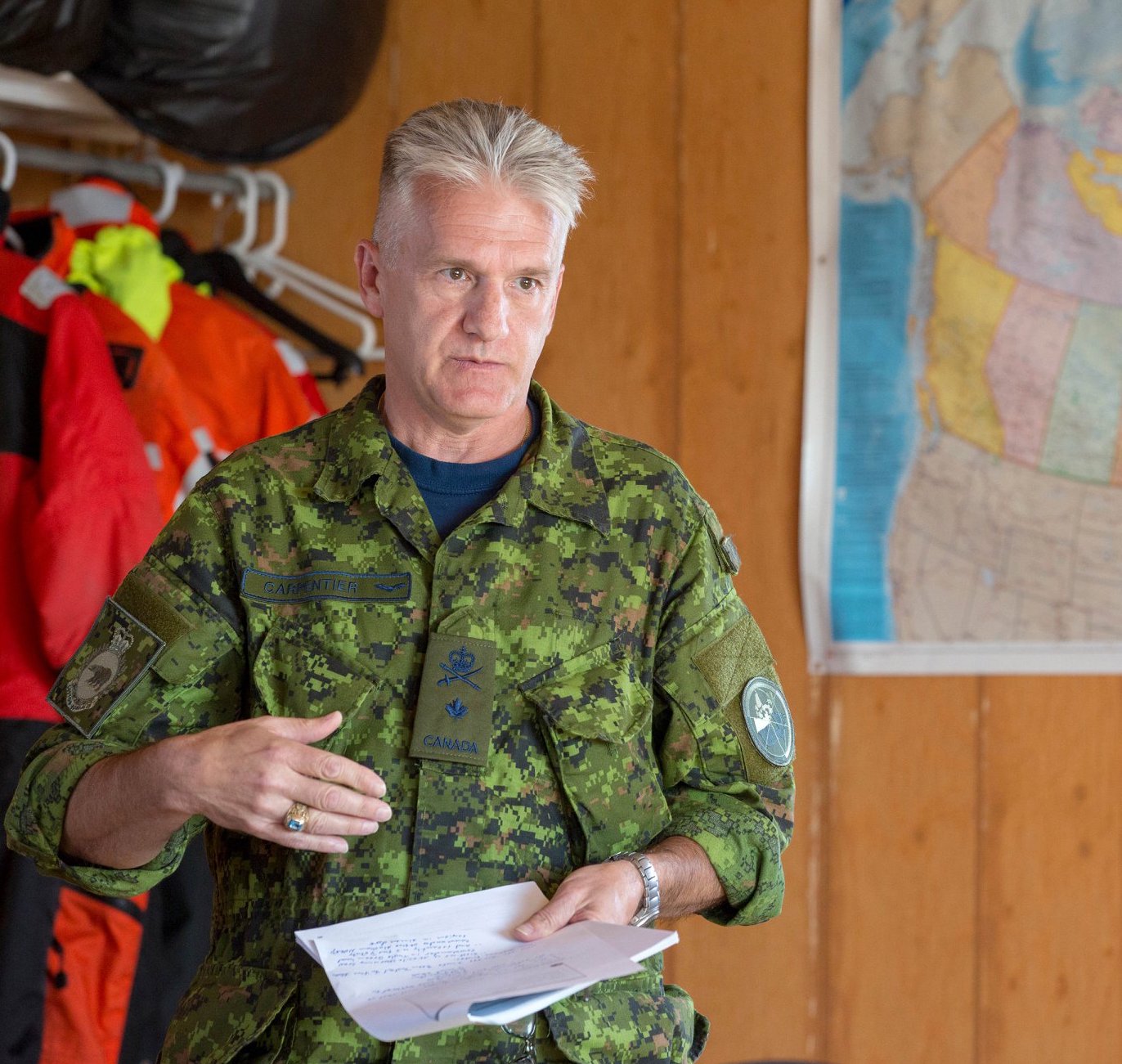
Securing the Canadian Arctic with Brigadier General Patrick Carpentier, Commander of Joint Task Force Northdec 10, 20191249Responsible for all Canadian Armed Forces activity across the vast arc of northern Canada, Joint Task Force North plays a crucial role in safeguarding the North American Arctic. Polar Geopolitics is honored to welcome Brigadier General Patrick Carpentier, Commander of JTFN, for episode 20 of the podcast. BGen Carpentier discusses the main missions of JTFN and the array of challenges Canadian force
Resilient Regime at 60: An international law perspective on the ATSnov 21, 20191853Fresh off the 38thmeeting of CCAMLR that once again failed to achieve consensus on additional marine protected areas, the ATS might be seen as showing signs of stress amid escalating great power competition. Associate Prof. Jeffrey McGee, an expert on international law and Antarctica at the University of Tasmania, however, makes the case that the ATS is a resilient regime that 60 years after its s
ATS under pressure: Dome A, Australia and great power geopolitics in Antarcticaokt 18, 20191435Is the Antarctic Treaty System obsolete, and could it collapse in the near future? Dr. Elizabeth Buchanan of the Australian National University explains why she is concerned that the increasing great power interest and Antarctic activity—ostensibly in the name of science—could jeopardize the almost 60-year-old ATS, and even lead to conflict if the Treaty is not updated to reflect current geopoliti
Deep dive into Ocean and Cryosphere IPCC Report with coordinating lead author Martin Sommerkornsep 30, 20191579Environmental change in the frozen parts of the planet—the Cryosphere—have implications well beyond the polar regions and motivate much of the increased international interest in the Arctic and Antarctic. To better understand this key driver of scientific research, climate activism and geopolitical calculation, this episode of the podcast takes a deep dive into the just-released landmark IPCC Spec
Paul Musgrave on Trump and Greenland in a Global and Historical Contextaug 23, 20191941In the midst of an escalating diplomatic crisis between the United States and Denmark, international relations expert Prof. Paul Musgrave joins the Polar Geopolitics podcast to provide analysis, insight and an array of perspectives—American, global, historical—on Donald Trump’s interest in buying Greenland, an unfolding story that has sent shockwaves far beyond the Arctic.
Hot Take on Trump's Greenland Gambitaug 21, 20192326Reports of Donald Trump's interest in the U.S. buying Greenland from Denmark - without doubt the most unexpected and outrageous Arctic news story in recent memory - has attracted ridicule and rapidly morphed into a diplomatic crisis. Associate Professor Jon Rahbek-Clemmensen, an expert on Denmark-Greenland-U.S. relations at the Royal Danish Defense College, joins Polar Geopolitics for an analysis